

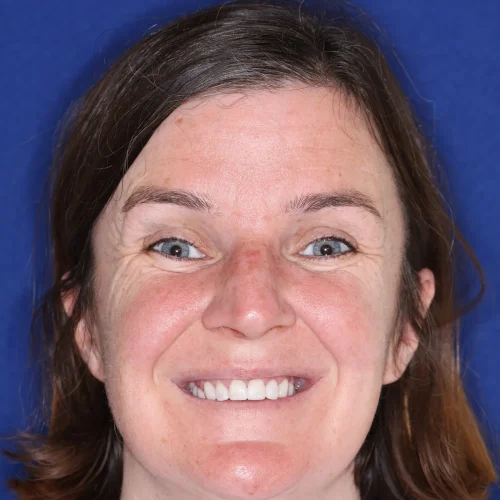

Restorative Aesthetic Care

Restorative Aesthetic Care

Orthodontics to simplify your Restorative Care

In many cases, orthodontic treatment is recommended before restorative dentistry such as veneers, crowns, bonding, or implants in order to simplify and optimise outcomes.
 
By gently moving the teeth into better positions first, orthodontics creates a healthier, more balanced foundation for any restorative work.
 
This often means:
-Less drilling or tooth preparation
-More conservative restorations
-Improved bite and long-term stability
-Optimal aesthetic outcomes
 
Even short courses of orthodontics — sometimes just a few months — can make a significant difference. 
 
Aligning the teeth beforehand allows restorative dentists to work more precisely and preserve as much natural tooth structure as possible.
 
At Synergy Orthodontics, treatment is planned collaboratively with restorative dentists, ensuring a coordinated approach that delivers predictable, high-quality results.
 
Orthodontics first isn’t about making treatment longer — it’s about making the final result simpler, safer, and longer lasting.
 

See our smile before & After

Benefits Of Treatments

Better Fit

Aligned teeth allow restorations to sit more precisely.

Less Drilling

Reduces the need to remove healthy tooth structure.

Longer Lasting Results

Improves durability by improving the bite first.

Easier Cleaning

Straight teeth are easier to clean and keep healthy.

Frequently Asked Questions

Why is orthodontics recommended before restorative treatment?
Orthodontics is usually recommended before restorative treatment because it sets up the teeth and bite in the best possible position first—making any restorative work more conservative, predictable, and longer-lasting. If your teeth are restored (with fillings, crowns, or veneers) while they’re still misaligned, you’re often compensating for a problem rather than fixing it. That can mean removing more healthy tooth structure, creating restorations that are under more stress, or ending up with a compromised aesthetic result.
 
By having orthodontics first:
-Tooth position is improved and corrected, so restorations can be smaller and less invasive.
-The bite is improved, reducing uneven forces that could cause restorations to fail or wear prematurely.
-Space can be created or redistributed, which is especially important if teeth are crowded, missing, or small.
-Gum health is often easier to maintain, which supports the longevity of any restorative work.
 
Aesthetic outcomes are better, because teeth and smile proportions are properly aligned before shaping or restoring them. In summary, orthodontics can address the underlying structural issues, while restorative treatment fine-tunes the shape, function, and appearance after.

Not necessarily. Short aligner treatment can often be completed in a few months and may simplify the restorative phase. Also if you are missing front teeth, we can paint your aligner to mask the appearance of a missing tooth during the process. 

 
Aligners work seamlessly with restorative treatment by allowing precise digital planning of tooth movement and space for restorations such as veneers, crowns, or implants. They’re removable, making it easier to maintain excellent oral hygiene and gum health—key for long-term restorative success. 
 
Unlike braces, aligners don’t require brackets on restored teeth, reducing the risk of damage to crowns or veneers. They also allow for a more flexible, staged approach—treatment can be paused to place restorations and then continued. Bonding brackets to restorations does not always work therefore if you have multiple restorations already which are not planned for replacement- aligners may suit you better.
 
Additionally for patients missing a front tooth, aligners can even be custom painted to mask the gap during treatment, offering a more aesthetic solution. Overall, aligners provide a discreet, comfortable, and highly controlled way to prepare the teeth for optimal restorative outcomes.

In many cases, yes. Alignment allows for more conservative restorations with less removal of healthy tooth structure required otherwise.

Yes, treatment is often planned collaboratively to ensure the final result is functional, aesthetic, and predictable. Dr Sinnott works with leading Restorative colleagues, so don’t worry if you do not already have a dentist to restore your teeth, we work collaboratively with many leading restorative dentists.