Clear Braces

Clear Braces

Clear Braces In Dublin

Clear braces work in a similar way to traditional metal braces but use tooth-coloured brackets to make them less noticeable. They are fixed to the teeth and use gentle, controlled pressure to gradually move teeth into the correct position. This makes them a popular choice for patients who want effective treatment with a more subtle appearance. Some of our teen patients (pictured) chose a combination of clear brackets with coloured elastics, we can also provide clear elastics if you prefer.

They are suitable for treating a wide range of orthodontic issues, from mild crowding to more complex alignment problems. Clear braces offer the same level of precision and reliability as metal braces while blending more naturally with your teeth. With regular adjustments, they provide a balanced option between aesthetics and performance for a confident, straighter smile.

Benefits Of Treatments

Discreet Appearance

Clear or tooth-coloured brackets blend with your natural teeth, making them less noticeable than metal braces.

Effective Treatment

They can treat a wide range of alignment issues, including complex cases.

Fixed to teeth

As they are attached to your teeth, they work continuously without needing to be removed.

Precise Results

They allow controlled and accurate tooth movement for reliable, long-term outcomes.

Frequently Asked Questions

Clear (ceramic) braces use tooth-coloured brackets and a thin wire to gently move your teeth into the correct position. They are a discreet, reliable, and effective option for treating a wide range of alignment issues. With regular adjustments, they help create a straighter, healthier smile.

Treatment time varies among patient depending on individual need, but most patients wear braces for 6 to 24 months depending on their case. Some cases can go above 3 years if very complex.

Yes, they offer similar effectiveness and can treat both simple and complex alignment issues.

You can eat most foods with clear braces, but a few adjustments are needed. It’s best to avoid very hard, sticky, or chewy foods, as these can damage the brackets or wires. If a bracket comes off, you will usually need an additional appointment to repair it, which can add time to your treatment—so being careful with your diet is important. Cutting food into smaller pieces and choosing softer options can help, especially at the start. Over time, eating will feel more natural.

Unlike braces, clear aligners are removable, so they don’t require the same dietary restrictions.

The brackets themselves are stain-resistant, but elastic bands may discolour over time if exposed to certain foods and drinks with strong colouring such as tumeric or coffee. Clear elastics will stain easier than strong colours such as navy or black.

Keeping your teeth clean with braces is essential to prevent plaque build-up and staining. Brush after every meal using a fluoride toothpaste, paying close attention around the brackets and along the gumline.

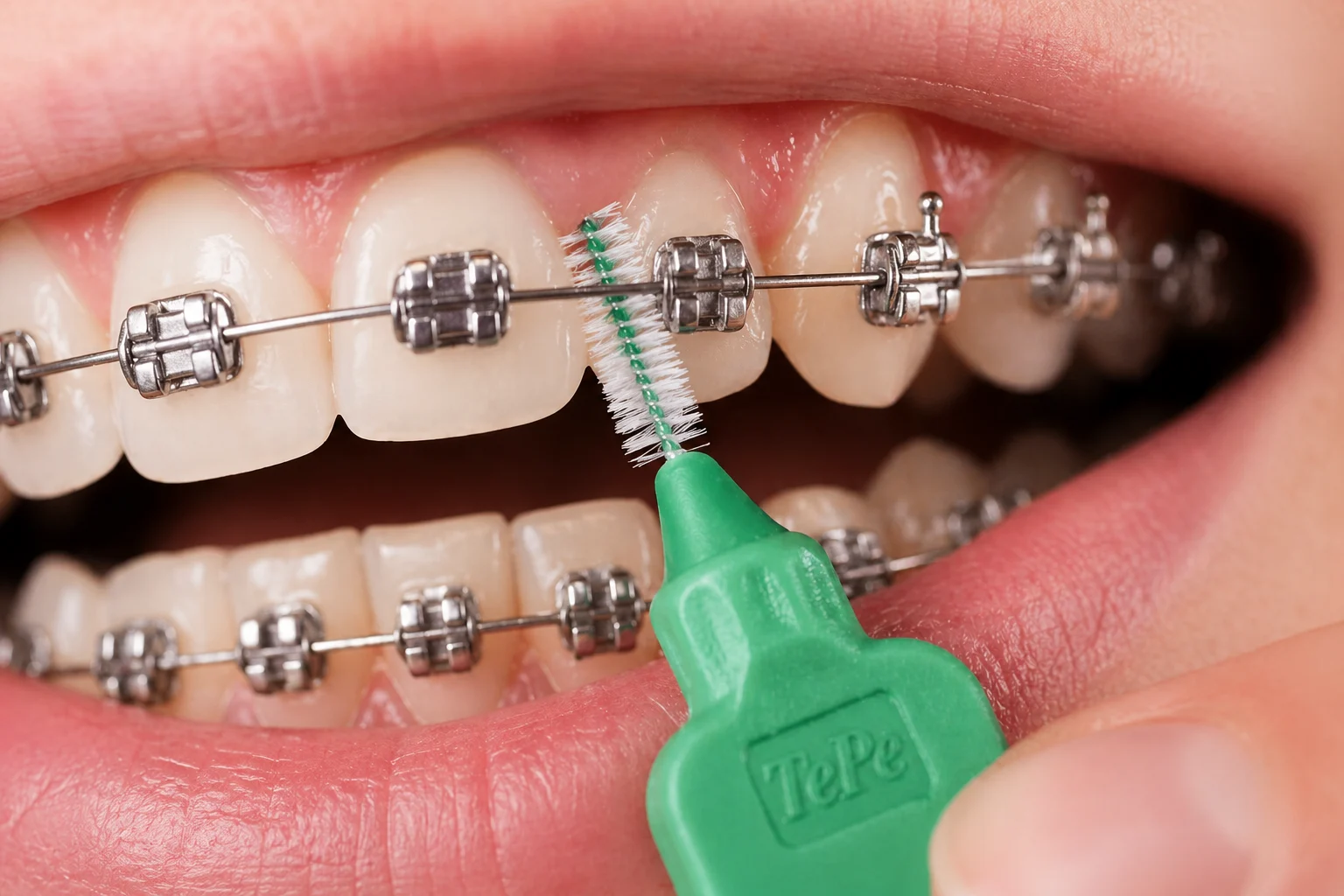
It’s very important to use TePe interdental brushes (green, blue, or yellow) to clean in between your teeth and around the wires, as these areas are difficult to reach. If plaque isn’t removed properly, your gums can become puffy and inflamed, making them even harder to clean and also more difficult for teeth to move. If cleaning is not good enough treatment may be completely abandoned. 
 
It is important to attend regular dental check-ups with your general dentist and hygienist visits to keep your teeth and gums healthy throughout treatment. Your Specialist Orthodontist is specialised in straightening your teeth while your general dentist focusses on general dental health and decay, etc.